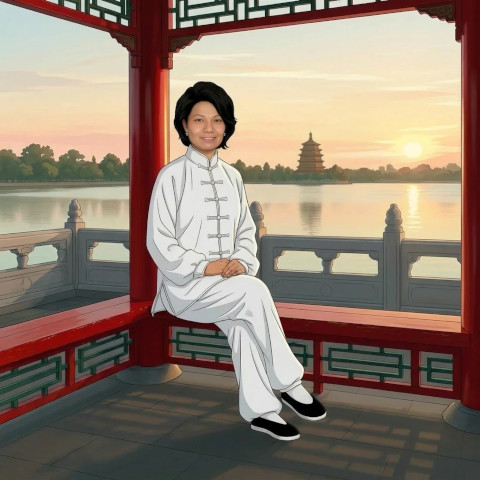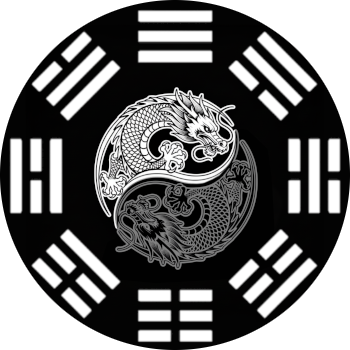
If you’re visiting my page for the first time, you must have wondered why it has such a chingón name. Since this article is being translated into other languages, allow me to explain what’s up with this charming but controversial word “chingón.”
The word chingón in Mexican Spanish means someone who is extremely competent, skilled, and excellent at what they do, or, referring to objects, things that are of excellent quality, very good, and fun. The Book of Changes is called I Ching (易经). The fusion was inevitable and, frankly, perfect for my project. But because chingón is a word of vulgar and coarse register, some people didn’t find it so funny. So, in this article I’m going to explain why I chose “El I Chingón” as the name for my project and domain for my website.
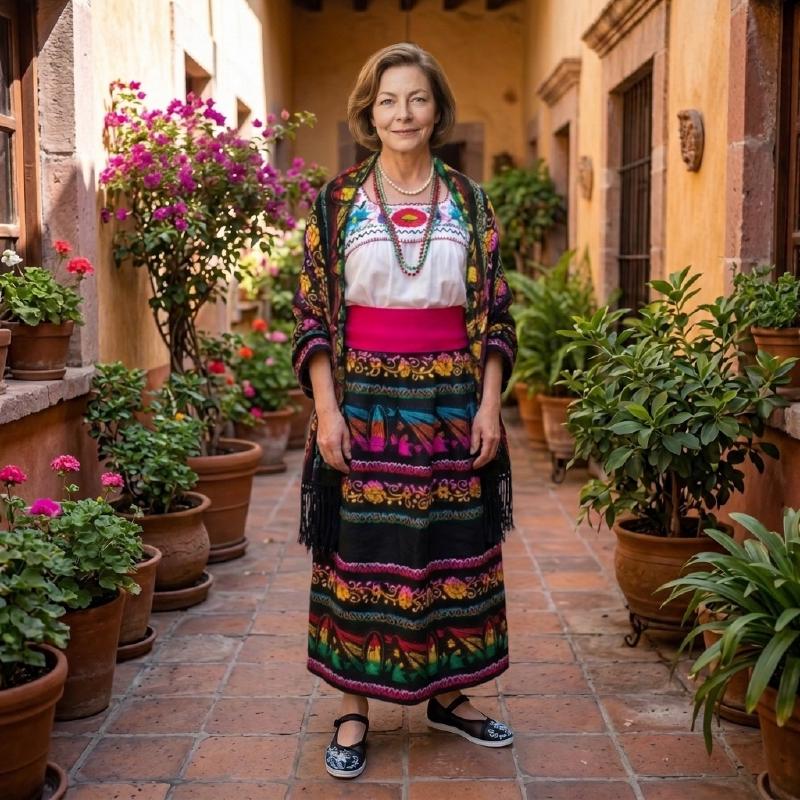
The Controversy#
Let’s start with the arguments against first. A karateka friend of mine, interested in Eastern philosophy, himself being familiar with the I Ching, upon my telling him about my project and this website, opined that the name was very ill-advised and not serious. He said he would visit my website only because, knowing me and knowing my strange and twisted sense of humor, he knew that beneath that vulgar and trivial name there would be serious content of substance, but that it would never occur to him to open a URL with elichingon.com to look for information about the I Ching.
I also mentioned my project and my page to my former tai chi instructor, a man with decades of experience teaching Chinese martial arts, adding that, in the interest of achieving greater dissemination for my project, I was considering showing it to some Chinese cultural institutions, such as the Confucius Institute, among others. He immediately advised against it, because of the vulgar name. He argued that the I Ching is not only a text thousands of years old, but the fundamental pillar of Chinese thought, philosophy, and spirituality, and that the Chinese, despite their strategy of projecting soft power in the rest of the world1, would never look kindly upon such a desecration of the Book of Changes. Moreover, he said he wouldn’t lend himself to helping me spread my project with that name either.
All weighty reasons, but as you can see, here we are, spreading the word about the I Ching through my website elichingon.com. So why did I disregard the criticisms against that name?
The Spirit of the I Ching#
This is not just a project for disseminating the I Ching. I try to make every aspect of the project itself like the I Ching, which speaks of the cosmic dance between two principles that are not antagonistic, but complementary. According to the I Ching, no opposite pole has more value or hierarchy than the other: the I Ching does not fit within Manichaeism. Therefore, if the I Ching could speak (and it can speak, let me tell you!) it would not opine that my choice for the name of my project is good or bad, but rather, it would invite me to reflect on whether it is in accordance with the forces and dynamics of these times, and with my goal of making this wonderful book known to as many people as possible.
My project is, in many respects, an incarnation of Hexagram 11, T’ai, Peace, which has as its lower or inner trigram Heaven (the masculine Yang principle), and as its upper or outer trigram Earth (the feminine Yin principle). In the article about Dài Líng Nà, I clarify that she, as the personification of the feminine aspect, is the visible face of the project, what people see from the outside, while the human author, as the masculine aspect of the project, remains hidden on the inside. In the same way that Dài Líng Nà projects her feminine softness from the outside, the sense of humor (the Yin principle) is also a projection of softness on the outside (the name of my project) because it serves to dismantle the excessively stiff, rigid, serious, and rigorously academic (Yang) quality of the content inside my website. The user enters my site seeing a short, comic, and chingón name, but upon finding the rigor and seriousness of my articles, stays reading, favorably impressed by their quality. Earth outside and Heaven inside - under the auspicious configuration of Hexagram 11, everything flourishes, says the I Ching.
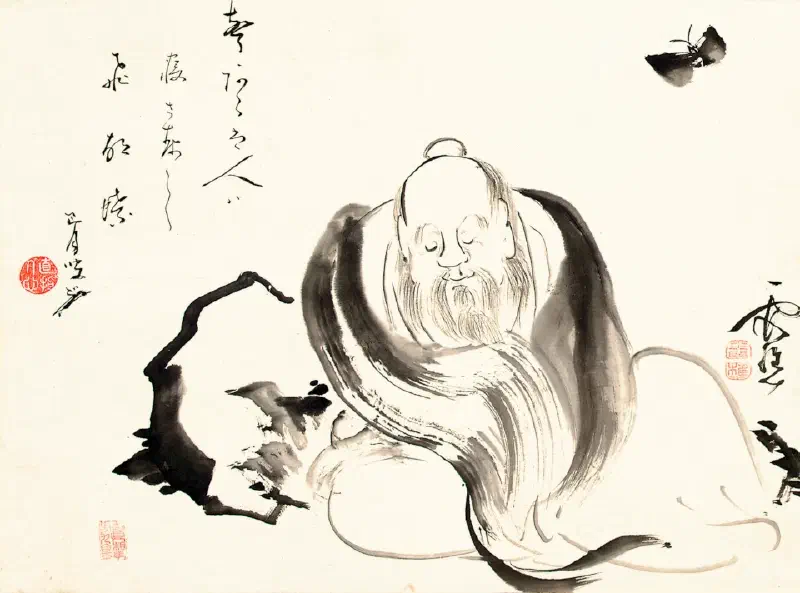
But even within the Chinese tradition, the irreverent spirit is not entirely foreign. Let’s talk about Chuang Tzu (or Zhuangzi in pinyin) - the most irreverent, iconoclastic, and coolest sage in Chinese history. The same one who famously said that he didn’t know whether he was a butterfly or a man dreaming of being a butterfly, which would surely have drawn laughter from a Latin American audience, given our particular sense of humor and our culture of chalequeo2. Chuang Tzu was a professional joker who used his sense of humor and irony to dismantle the rigid, pompous and serious thinking of the academics of his time, the Confucians. He used absurdity, comic parables, and irreverent language (Yin) to sow crushing and profound philosophical truths (Yang).
Branding in These Times of AI#
I have just sketched out a philosophical manifesto to justify the name of my project, even invoking an authority of the Chinese tradition such as Chuang Tzu. But let’s put our feet on the ground: there are reasons of a highly pragmatic nature that justify the choice of this name, and they have everything to do with technological trends and digital survival in 2026.
If I had named this project sociedad-de-amigos-del-i-ching.org, I would have committed digital suicide. Not only because that domain is not something that translates to other languages easily (and mine is a multilingual project), but because in terms of usability and cognitive load, Miller’s Law and the principles of the Nielsen Norman Group, human memory is limited. A long and solemn domain is perceived as noise and is forgotten in seconds. In contrast, a short, pronounceable name anchored in a cultural pun is engraved in the brain as a single block of information.
But beyond human memory, there is the problem of search engines. In classic SEO (Search Engine Optimization), trying to compete today for the generic keyword “I Ching” against giants like Wikipedia, EcuRed, or university repositories with decades of history is a lost battle. The rules of the game have changed. Traditional organic traffic to small sites is collapsing (60% according to Chartbeat), because today searches assisted by Artificial Intelligence dominate (what we call GEO, Generative Engine Optimization).
And this is where “El I Chingón” works as a true semantic Trojan horse. It is an easy way to infiltrate searches with the “i ching” keyword from withing the domain name URL.
Moreover, as the Digital Rain blog documented when speaking of “authentic weirdness,” artificial intelligences in 2026 do not cite generic and boring “authoritative” content (they generate that themselves); AIs reward and cite content that is unmistakable, specific, and has a dense cultural anchoring.
I am not a mass success story yet (hardly anyone knows my website), but this is a long-term architectural bet. By creating a brand with “authentic weirdness,” I avoid fighting for crumbs in generic search and create my own cultural entity. If someone searches for my name, there is no competition; I am the only result. The name becomes a natural filter: it drives away purists without a sense of humor and attracts analytical minds that appreciate technical rigor, radical privacy, and, of course, a good dose of irreverence.
El I Chingón - a Cultural Bridge for the World#
Now let’s talk again about Chinese soft power, and the criticisms that I cited at the beginning regarding the name of my project. Chuang Tzu, whom I would consider the patron saint of my project, is an inseparable part of the Chinese genius and the tradition of the Chinese people. His irreverent spirit invites us to diminish ourselves in our ego and not to take ourselves so seriously, so that we may receive the wisdom of the I Ching.
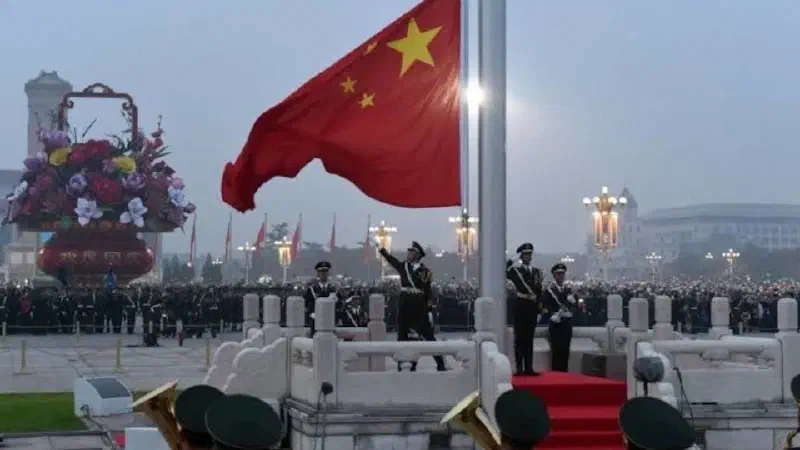
Perhaps the bureaucrats of the Chinese Communist Party, instead of censoring me, would be better off thanking me, if they ever come across this humble website. China is apparently destined to be the Hexagram 8 of the world (䷇), the one that gathers all peoples and nations, the kingdom of the center. But the soft power that China projects through its megaprojects, its futuristic cities, its parades, the solemnity of its institutions, is too Yang to be soft power. It lacks something essential - it lacks coolness. It lacks the “Chuang Tzu touch”. It needs a little more chingon-ness. Thus, Yang would become Yin, Yin would become Yang, and China would become the Hexagram 14 of the world (䷍)—the possession of what is great, which is a configuration of supreme success, even more favorable than Hexagram 8, according to Wilhelm.
This very chingón project is born from a desire to be a bridge between the peoples of the world and something that is already the universal heritage of all humanity - the I Ching. So without further ado,
¡Viva México, cabrones!
Zhōngguó, niúbī!3
Deutschland, Alter, wie geil!
¡Y que viva Venezuela en esa mierda, caballero!"
Sincerely,
Dài Líng Nà
(A student of the I Ching who dreams of being like Chuang Tzu when she grows up)
References#
Ahrefs. (2026). AI chatbot traffic research: What the data says about AI referrals. Ahrefs Blog. https://ahrefs.com/blog/ai-chatbot-traffic/
Chartbeat / ExtremeTech. (2025). Google’s AI Referrals Tank, Sending Far Less Traffic to Online Publishers (Report on Chartbeat data and the decline of traditional organic traffic). ExtremeTech. https://www.extremetech.com/internet/googles-ai-referalls-tank-sending-far-less-traffic-to-online-publishers
Digital Rain. (October 24, 2025). Tech Noir & SEO anxiety: What actually ranks in 2025. Digital Rain Studio. https://digitalrain.dev/posts/2025-10-24-tech-noir-seo-anxiety-2025
Miller, G. A. (1956). The magical number seven, plus or minus two: Some limits on our capacity for processing information. Psychological Review, 63(2), 81–97. https://doi.org/10.1037/h0043158
Nielsen, J. (1999). Domain name defensiveness (Principles of usability and retention in domain names). Nielsen Norman Group. https://www.nngroup.com/articles/domain-name-defensiveness/
Similarweb. (2026). The state of AI referral traffic by industry. Similarweb Research & Insights. https://aisearch.similarweb.com/blog/ai-referral-traffic-by-industry/
The People’s Republic of China currently occupies second place in Brand Finance’s Global Soft Power Index, below a rapidly declining USA. The Chinese model integrates economic development, technological innovation, and geopolitical stability as its main tools of attraction. Cultural aspects such as martial arts, Chinese opera, philosophy and religion, and of course the I Ching are also included. ↩︎
The word chalequeo is Venezuelan Spanish slang for playful teasing/banter. ↩︎
Zhōngguó, niúbī! (中国, 牛逼!) would translate as “China is the absolute sht!”. Niúbī is vulgar but socially accepted among young people. It denotes something or someone is just f**ing awesome. ↩︎